


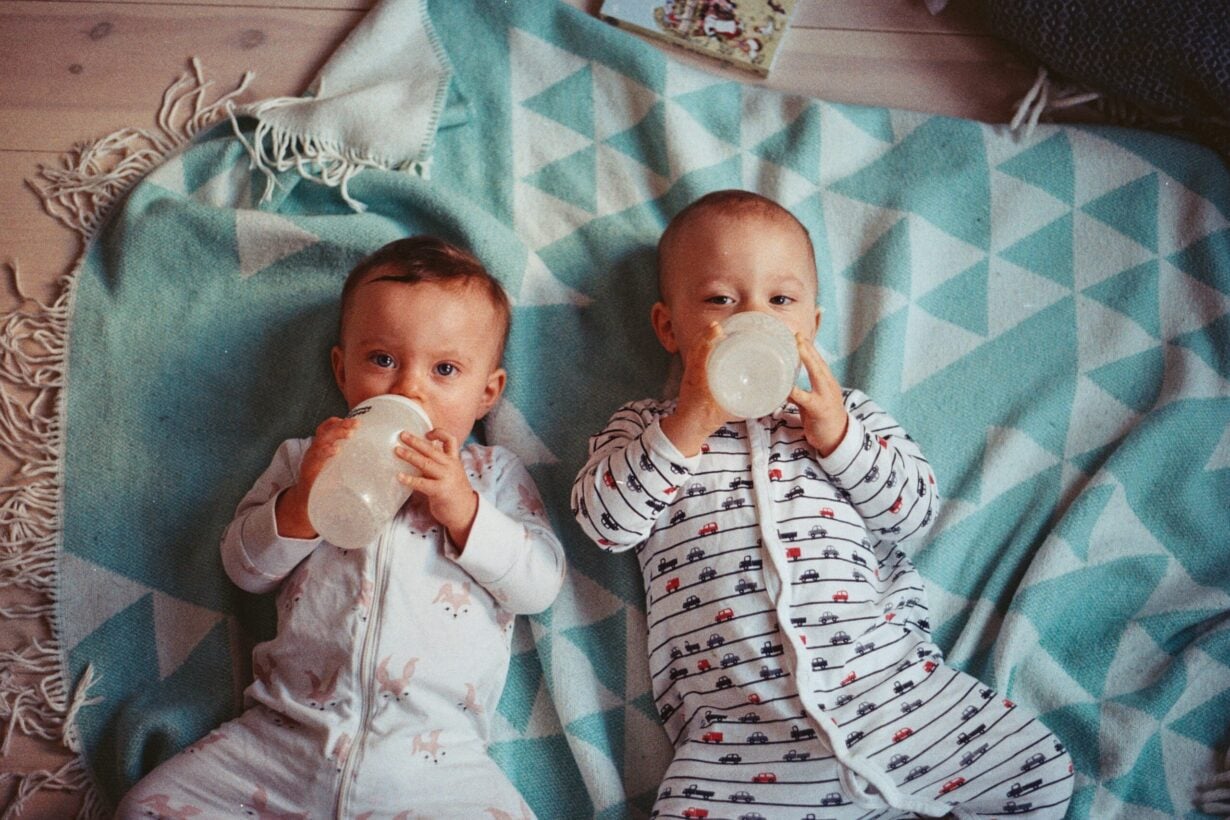
Picture : @sosarah
Bottle material, nipple shape and flow, whether it’s easy to take apart or not, color and patterns, size, price, brand… Feeling lost? That’s totally understandable — the market is huge. Since some criteria deserve special attention and choosing the right baby bottle isn’t just about looks, we’re breaking it all down for you.
Glass or plastic baby bottle: eco-friendly vs. practical.
Choosing the right baby bottle also means choosing your battles! And in this respect, glass bottles are winning over many parents: made from 100% natural components, they contain no potentially harmful toxins for your baby and allow you to make an eco-friendly choice. That said, plastic bottles shouldn’t be ruled out entirely. Today, all baby bottles are guaranteed BPA-free (a controversial chemical compound once used in food-grade plastics, banned in France for baby bottles since June 2010), and some models also offer solid eco-friendly advantages. Plus, since they’re lightweight and unbreakable, plastic bottles remain the most popular option today…
A good plastic baby bottle? The brand Le Biberon Français uses Tritan for baby products, a recyclable material. Plus, the bottles are made in France — a bonus for eco-friendliness.
A sturdy glass baby bottle? Le Biberon Français also offers glass bottles made in France, combining all the benefits of a practical and eco-friendly bottle!
The alternatives? Stainless steel bottles like those from Pura or OrganicKidz, or the VIéco Biobased bottle made from plant-based materials.
Capacity, shape, and flow: choosing the right baby bottle based on your baby’s age.
Some features of the baby bottle should be chosen according to the child’s age.
- Bottle capacity ranges from 30 to 350 ml. As your baby grows, so do their milk needs. Some parents choose to switch bottles as their baby grows, while others go straight for the larger sizes — it’s entirely up to you !
- The bottle’s shape affects how easy it is to hold. An ergonomic design, possibly with handles, makes it easier for your baby to grip the bottle when the time comes. Classic shapes are generally easier to clean — especially when they have a detachable base and a wide neck.
- Flow rates 1, 2, 3, or X. For the same bottle model, you can choose between different flow rates. As your baby grows, parents usually increase the flow rate gradually. Note: certain types of infant formula — especially thickened formulas — require a level 3 or X-flow nipple. Similarly, a higher flow rate is necessary if your child drinks soup from a bottle.
Colic and spit-up: special bottles designed to ease discomfort.
When a baby drinks, they can swallow air. It’s usually not a problem, except when the baby suffers from colic or is prone to spit-up, as swallowing air can make these issues worse. That’s why some bottles are specially designed to prevent this.
The anti-colic or anti-spit-up bottle is angled: its tilt keeps the nipple filled with milk at all times. A helpful solution for all new parents struggling with infant colic…
Choosing the right baby bottle… and knowing when to switch!
Many parents choose their baby’s bottle based on its look or price, only to switch later. Some babies prefer a round-tipped nipple, while others will only accept a physiological or anatomical nipple. Sometimes, you have to try several types of bottles to find the one that works best for you!
Note: some foreign countries have a more advanced baby gear market. It can be worth checking out what’s available elsewhere to help you choose the right baby bottle! The Swedish brand Twistshake might be worth a look.
Find your ideal maternity outfit and discover all our pregnancy clothes on our Jolibump website: designed to wear before, during, and after pregnancy.